(Summary: Bishop Bernard Fellay of the Priestly Society of Saint Pius X (SSPX) gave a homily that encapsulated the position of the Society after the recent announcement by Fr. Pagliarani) Originally posted on Substack on 09th February 2026
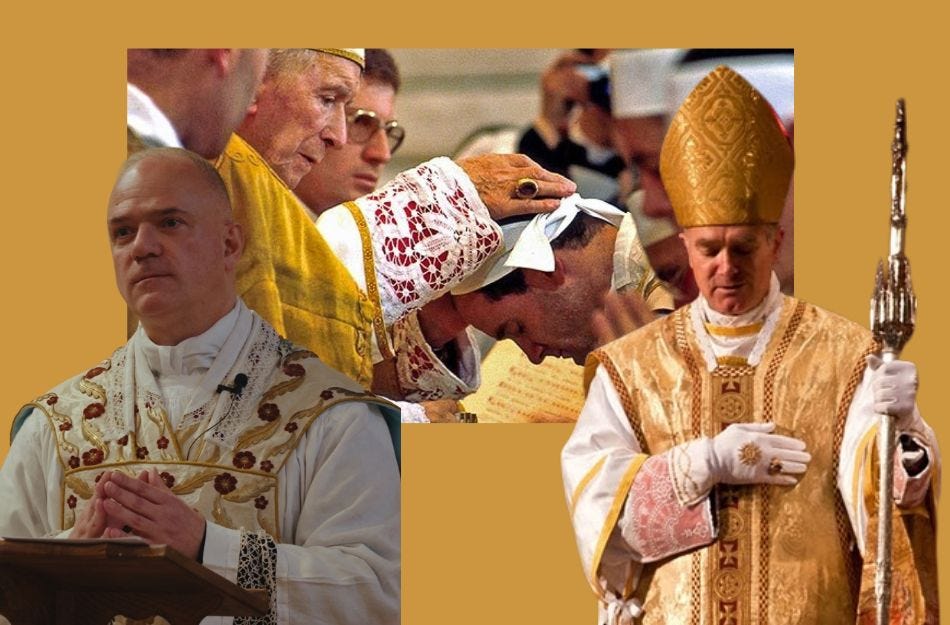
Last week, on the 2nd of February, after the huge news broke about the SSPX announcement to go ahead with consecration of Bishops in July of 2026 without approval from Rome, Catholicdom was in complete meltdown – first, there were those who disagreed with the SSPX’s stance – the popesplainers, the ‘normies’, and the Conservative Semi-Trads – who rushed to label the SSPX as schismatic or protestant.
Then there were the absolute-sedevacantists, who in their personal capacity hold that they are ‘absolutely sure’ that the seat of Peter is vacant, and who in some ways despise the SSPX and Abp. Lefebvre owing to his continued allegiance to Rome; The sedes went on a rampage on social media reminding everyone why the endeavour by the SSPX, in their esteemed opinion, exposed the hypocrisy of the Society, who in one breath called out the errors of Rome and disobeyed the Pope, and on the other hand maintain that they are still subject to the same authority.
Then came the SSPX resistance – those who broke away from the SSPX because of disagreements & suspicions after the death of Abp Lefebvre, holding that the Society was deviating from the goal of it’s founder by hobnobbing and getting too cozy with Rome.
What an absolute mess! No matter what happens in July (or even before that), Fr. Pagliarani (the Superior General of the SSPX) will live in infamy. If he does go ahead and consecrate Bishops, he will be damned by most of Catholicdom as a heretic and a schismatic – perhaps even inviting a formal excommunication on the Society (again!). He will also be continuing with the landmark decision taken by Abp Lefebvre in 1988 when he first consecrated Bishops without a papal mandate (there was an isolated case of Bishop Tissier of the SSPX consecrating a Bishop in 1991, but that was without the fury and fanfare as in this case). If he dosen’t, Pagliarani will risk the ire of the Rad-Trad world who will hold him guilty of selling out to Rome.
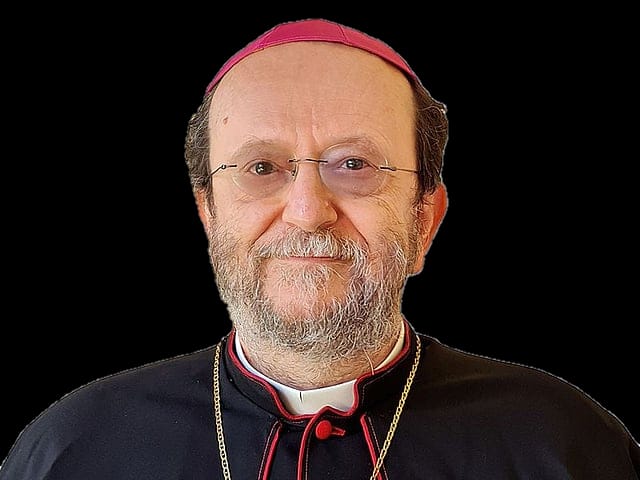
Now Bishop Bernard Fellay, the other Bishop consecrated in 1988 by Abp Lefebvre has given an address to seminarians (I presume) in a homily where he explained rather vividly what led to their decision and on the crisis in the Church. Here are a few valuable excerpts which I found important.
Referring to the decision to go ahead with consecrations without approval from Rome, Bp. Fellay says:
“First, this matter is indeed very serious. There’s no doubt about it. And such an act can only be justified by a proportionate situation. It is not out of pleasure or wishful thinking that we proceed to consecrate bishops, even if Rome would say no.”
Referring to the state of necessity owing to the crises in the Church Bp. Fellay says (emphasis mine):
Why do we say state of necessity? What do we mean when we say state of necessity or emergency? We speak of such when those who are responsible for the good order of an organization, of a city, of a state, are no longer able to fulfil their duty. It’s not a question of bad will. It is not a question of judging why they do so. It is simply a fact. […] we don’t look at the reason why they do what they do. We just see that at a large scale, they are not able to fulfil what they are for. That is, save the souls
He repeatedly calls attention to the state of emergency in the Church and highlights the desire of the Society to not judge the authorities but call things out as they see it:
But it is when I give you these examples, which are real, it’s just to show you the mess, the confusion, in which we are. […]this description which I bring to you is not about trying to judge this authority. It is just to describe a situation…
He also relates how they arrived at the decision to go ahead and consecrate Bishops by bringing out the usual high-handedness of Rome:
[…] they block us under the pretense that they are the authority, which we do recognize, and we (are placed) under the (a) threat, if you do that, you will be out.
And we say no. Things do not work like that. You have the supreme power but this power is not absolute. You cannot say this is because I have decided. The authority is always related to the truth and to the good. And this truth and this good for the Church is the salvation of souls. If even the Pope make use of his powers to go against this aim or outside of this, it’s (it is) an abuse. […]It cannot bind, he cannot bind the conscience.
Here is the full address/sermon relayed by Bishop Fellay which you can refer to.
For those who would like to reference this sermon for later, and for those who prefer textual reading, the below is the transcript of the above video with minor grammatical changes and contextual details provided in brackets by me.
Full Transcript
In the name of The Father, The Son, The Holy Ghost, Amen.
Dear seminarians, my dear faithful, dear brethren, at the beginning of this week, on the feast of the purification of the Blessed Virgin Mary, presentation of our Lord, our dear Supergeneral, Father Pagliarani, announced that (pauses) he asked, (the Superior General asked) the bishop, who are at the service of the Society, to consecrate new bishops. It is not difficult to understand, given the seriousness of the matter, that this caused a lot of, we could say, contradictory feelings between those who are relieved by this announcement and those who are scared to death.
So. Let us give some points and invite you, my dear brethren, to read what the interview with Father Pagliarani gave on these topics and which was published on the site. And I think you may find some of these documents just outside the door. First, this matter is indeed very serious. There’s no doubt about it. And such an act can only be justified by a proportionate situation. It is not out of pleasure or wishful thinking that we proceed to consecrate bishops, even if Rome would say no.
Even when we just say that, of course, there are thoughts, there are already people who intervene and speak of schism, of excommunication, the big, big words. So, this act cannot be understood or justified if we do not understand that there is a major problem within the Catholic Church. This major problem, we call it crisis. There is a crisis in the Church. We use other words which qualify the same when we say, when we speak of state of emergency, or state of necessity.
What do we mean with this? We do not deny, absolutely not, that our Mother, the Catholic Church, needs authorities and has authorities. We even say with the Church that the Holy Father, the Pope, has the Supreme authority on earth. Supreme means the highest authority. So we completely adhere to this conclusion that nobody can put himself above, nobody can judge the Holy See. We maintain that. And we with all heart want to follow these principles.
At the same time, we maintain, and it is not, once again, wishful thinking. It is just the facts which are in front of us. These facts which our Lord would qualify as fruits. The reality. In front of us. How do we have to appreciate what is going on in the Church? How do we estimate what is going on? As in any organization, human organization, and this is also true for the Church, the dominating point is the aim, the goal. And for the Church, this goal has been given by the founder of the Church, Our Lord Himself, and it is (the) salvation of souls. That’s why He came on earth. That’s why His name is Jesus, the Savior. And His mission, He entrusted to His Church. And He vested this Church with the means which are proportionate to this end. The end being totally supernatural, that is above, above any human means and capacities. That’s why we call it supernatural, above the nature (natural).
The means needs to be at the same level, supernatural, above the capacities of (the) human, and all these, God has given to only one entity, the Catholic Church. That’s why we say and we maintain that it is a dogma that outside of the Church, the Catholic Church, there is no salvation.Nobody can be saved outside of this with (what) Our Lord called His Church.
And the fundamental means are first the faith, and secondly, the grace. And the grace which is first of all communicated to the children of the Church by the sacraments.
The Council of Vatican I, (and) Leo the 13th, they explained as the first reason of the existence of the Catholic Church, the transmission of the revelation, that means of the faith. Explaining, which we find in all the books of the Revelation, without the faith, it is impossible to please God. Without the faith, it is impossible to be justified. That means to be brought from the state of sin into the state of grace. Without the faith, it is impossible to be saved. And that’s why God did provide these Roman Catholic Church with an incredible privilege which we call the infallibility. To be certain that this revelation which is what God told us,is brought from generation to generation. Our Lord Himself said, who does not believe is already condemned. It is clear!
Now look, look at the situation of the faith today in the Church. Think that! The Pope John Paul II, at the beginning of his pontificate, said, and he was speaking of the Catholic universities, heresies have been spread with full hands! That’s what he was saying. In the 80s, 90s, you have an enormous crisis at the level of the theologians. There was a text which was called the Charter of Cologne, of Cologne. Over 500 theologians, professors of theology in the Catholic universities rebelled against Rome (no reference available). The prefect of the Congregation of the Faith at that time, which was Cardinal Ratzinger, described that situation with three points of this modern theology.
The first point was there is no Creator. This modern theology forgets that there is a creator. They have replaced that by evolution (Darwinian evolutionary theory).You understand that if there is no Creator, there is no God.
The second point about our Lord, our Lord is not God. He’s the first revolutionary who ended very badly because he was killed on the cross.
And the third point described by Cardinal Ratzinger was, there is no hell, but there is no heaven. Heaven is on earth.
That was a description of major, think about 500 theology professors in the Catholic universities.That’s how the prefect of the congregation of faith describe what they teach. Think about it.
And you think that now things are better? Look at how Catechism is given today. Look at how and what these children of the Church are taught, what they know of the Catholic faith.
One day, the Archbishop of Phoenix told me that story. He explained to me that when they prepare to (for a) marriage (ceremony), they have to start from scratch. He told me that little story. So you have two, two who come to prepare for marriage.Their first meeting with the priest. Now these two are Catholic from birth,from baptism at very, very little age. So they get together. They are in front of the priest. And the priest say, okay, let’s start with a prayer. And he prays(ed) the Our Father. When he’s finished with his Our Father, the boy says to the priest, Father, your prayer, (is) fantastic!
So, the man, a Catholic of 20 years old, had never heard about the Our Father.
In Australia, A Catholic teacher, young lady, accompanies one of our faithful in our chapel. And our faithful in front of the Blessed Sacrament kneels down, genuflects, and the other says, why do you do that? And our faithful, because our Lord is there present in the tabernacle. And this Catholic teacher to say, oh, I thought he was in the lamp.
I just give you this, I could continue. I could continue during hours and hours.(These are) not bad people. Just good people who have not received the fundamental, the reason why the Church exists, the faith.
I don’t speak of the pagans. I don’t speak of those people who are outside, to whom our Lord sent the apostles.Where is the missionary spirit gone today? It’s killed, killed down.
Why?
Because now they pretend that everybody can be saved. Pope Francis dared to say that the plurality of religions belong to the wisdom of God. In other words, it’s God who wanted several religions, other religions. It demolishes the faith. (He should) speak of the sacraments. And you may argue, yes, but, all right, these things happen, but it’s not the fault of the authority.
Paul VI, Paul VI right after the council, not only spoke about some where, somehow, the smoke of Satan has entered the temple, the sacred temple, the Church! The smoke of Satan. He said, after the council, we were expecting a spring! And a storm has come. He would say to Jean Guitton, what is strange today is that a non-Catholic thinking is in the Church. And it’s very possible that this non-Catholic thinking may dominate, prevail! And he continued by saying, that it will never represent the Church. There will always be a little herd, as little as it might be. So, it is a situation which is just real.
Why do we say state of necessity? What do we mean when we say state of necessity or emergency? We speak of such when those who are responsible for the good order of an organization, of a city, of a state, are no longer able to fulfil their duty. It’s not a question of bad will. It is not a question of judging why they do so. It is simply a fact.
Take firemen.They are called to stop a fire, and suddenly they realize that there is no gas in the truck. Well, that’s enough to prevent them to do their job. Not necessarily badwill, they are simply unable to fulfil their job.
Take an ambulance who is running to an accident to try to save souls, and the ambulance itself has an accident. It is unable to fulfil its duty. And when we say state of emergency in the Church, that (is) what we say, we don’t look at the reason why they do what they do. We just see that at a large scale, they are not able to fulfil what they are for. That is, save the souls. And in a state of emergency, whoever can help, must help. It is no longer a matter of justice. It is a matter of charity. But you must help. You may not be a policeman if you are just
in front of an accident. You stop. You help the traffic.If you are in front of a fire and there is no fireman, you don’t say, well, I am not responsible. I am not in charge of…(trails off) No, you help to stop the fire.And that we may say, and that’s our situation.
In 2005, during the audience I had with Pope Benedict (XVI), at a certain moment, he asked me, so what’s the situation? How, where are we? Thinking of how can we proceed? How can we do things better? And I told the Holy Father, Holy Father, the situation of the normal, simply normal, Catholic life in the Church has been made largely impossible. And that is why every day, priests, religious, nuns, faithful can no longer in conscience continue that. And they come to us begging for help. And I continue telling him, as long as this Catholic life is not made possible again in the Church, we will not be able to proceed and to continue. And Pope Benedict did not deny it.
He said, well, I understand. We will have to proceed by steps, but we must not delay too much. But he did not deny that situation. In 2009, I requested a meeting with the Secretary of State, Cardinal Bertone (referring to Cardinal Tarcisio Bertone who served as the Vatican’s Cardinal Secretary of State from 2006 to 2013 under Pope Benedict XVI). And finally, I was sent to Cardinal Levada (referring to Cardinal William Joseph Levada) who was the newly appointed president of Ecclesia Dei. The reason of my request was the following, which I exposed (spoke) to Cardinal Levada.
I told him, so, since years now, since the year 2000, we (have been) speak(ing) with you. We (have been) speak(ing) with the Roman authorities. We try to see if there is a way to get a better situation. But I have an enormous problem. Because every time I come to you, I am facing (the) contradiction. I talk to one person, this person says something.I talk to another one, and this person says the contrary. How can we deal with you, authority?
I give you one example.
I met Pope Francis.The first time I met Pope Francis, he said, you are Catholic.I do not condemn you. A few months later, the number two, Cardinal Müller, said, these people are schismatics. They should be excommunicated. If that’s not (a) contradiction, what is it? And then how do you deal with these people?
I can give you another one.
It was under the beginning of Pope Francis, Someone, a priest, joined us. And his former superior sent him a letter, which was a letter from the congregation of the religious, a decision, a judgment on this priest. The congregation of the religious said, Father so-and-so, is excommunicated because he formally joined…(trails off), because he had lost the faith by joining formally the schism of Monseigneur Lefebvre.
So I went to Rome. I went to the Congregation of Faith with that letter. I started to read. And Monsignor Pozzo (likely referring to Archbishop Guido Pozzo – he served as a key Vatican official under Pope Francis, primarily responsible for overseeing relations with traditionalist Catholic groups, specifically regarding dialogue with the SSPX. During the papacy of Pope Francis, he held the position of Secretary of the Pontifical Commission Ecclesia Dei from August 2013 until its suppression in January 2019) stopped me in the middle of the sentence and said, oh yeah, I know that story. Three weeks ago, we talked to them, and we said to them, you cannot say that. You are not competent. You must revise your judgment. And to me, he said, the only thing you have to do with this letter is this (acts as if he is tearing a paper)
He continued by saying, you must tell your priests. and the faithful that not everything that comes from Rome comes from the Pope? And I answered to him, yeah, that’s correct. But that’s impossible, because how can I know if something comes or does not come from the Pope? What kind of criterion can I use? I will tell you what’s going to happen. If something pleases me, I will say it comes from the Pope. If it does not please me, I will say it does not come from the Pope (congregation laughs in amusement). And in fact, this sentence has been condemned by St. Pius X. But it is when I give you these examples, which are real, it’s just to show you the mess, the confusion, in which we are. And of course, in front of this confusion, the authority tries to put the burden on somebody else.
You have a marvelous example in Pope Benedict.His last talk to the Roman clergy, so a few, few, few days before he resigned it was already known that he was it kind of farewell in this talk he describes his experience of the Council Vatican II and towards the end he says: but there was another Council, the Council of the media. (In other words…) there was a true Council, the Council of the Fathers, and there was another council, the Council of the Media, he says. And he continues by saying, and this Council of the Media, was not Catholic.It was spreading a non-Catholic thinking. But it is that Council which superseded the real Council, and that’s the one which was accepted by the people.
And then he describes several of these big errors.One was collegiality. Another one was the reform of the liturgy, the Mass.
And when you reflect, you say, wait a minute, Who wrote collegiality? It was not the media. It was the bishops and cardinals and the Pope.
Who made the new mass? It was not the media. It was the Roman authorities.
So why suddenly put all the blame? Because the Pope says. (And) It’s because of that, that we have no vocations that the congregation, religious congregation are extinct.
They say wait a minute you put the blame on somebody else but what did you do or what did you NOT do to prevent it?
Once again, this description which I bring to you is not about trying to judge this authority. It is just to describe a situation which was very interestingly described already by Father Fuentes (referring to Father Augustine Fuentes) who was responsible for the Fatima (Apparition) and we gave a conference in 1958 to Mexican nuns and because of that conference he was sacked. Because just repeating what he had heard from Sister Lucy, he said that there will be a diabolical disorientation in the hierarchy that the poor people will no longer hear from the prelates a call to penance, that everybody will be left to himself for his salvation. More dramatic, it could not be described. 1958, look today. Look how disorientated are the poor souls. And that is why because this situation continues with ups and downs. Yes. But don’t tell me that the pontificate of Pope Francis did think, do things better. On the contrary, it did open many eyes. It is in that situation because when we deal with Rome, they still want us to accept these things which are killing the Church. That’s why we say we can’t. We are not going to do that. And that’s why, so to say, they, they block us under the pretense that they are the authority, which we do recognize, and we (are placed) under the (a) threat, if you do that, you will be out.
And we say no. Things do not work like that. You have the supreme power but this power is not absolute.You cannot say this is because I have decided.The authority is always related to the truth and to the good. And this truth and this good for the Church is the salvation of souls. If even the Pope make use of his powers to go against this aim or outside of this, it’s (it is) an abuse. It’s no worth, no strength. It cannot bind, he cannot bind the conscience. If as it is now, suddenly they want all the energies of the Church concentrated on ecology. We say sorry, we are not here to save the trees but the souls.
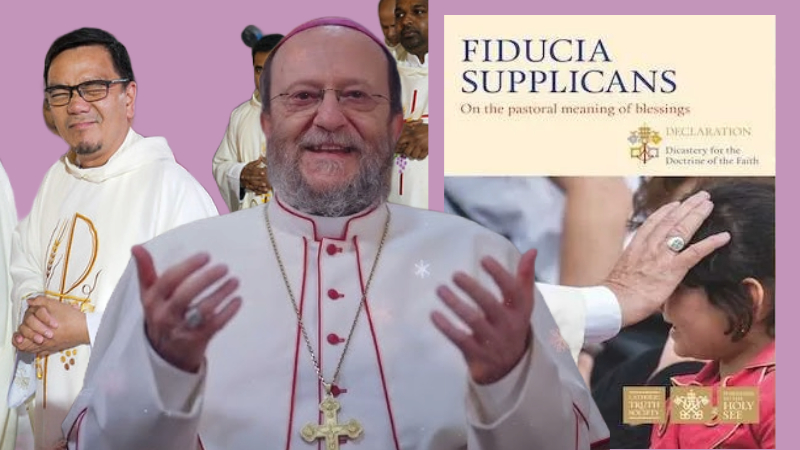
When about morals, they encourage invite those who are in sin, calling on them the blessing, inviting them to receive our Lord, while our Lord himself said that these kind of unions are sin. Well, he was speaking of divorced, remarried, if you want, not even speaking of those things we don’t speak about (homosexuality). This is the situation.
And in that situation we have to just (to) survive. As 38 years ago our dear
Archbishop (referring to Archbishop Lefebvre) said what we are doing with the consecrations is operation survival. We have the right to survive. We have the right because the Church is kind of contract which we receive by the baptism. And this contract is to go to heaven to receive eternal life through the faith and through the sacraments. We have a right to it. You faithfully have a right to these things, from the Church! from the authorities!
So what do we do? Well, of course, we pray.
It’s a time of intense prayer that the greatest good follow(s) of(from) this situation. But don’t panic. It’s not worth it. Stay in peace. Think that Divine Providence has guided us and will continue. Look at all these fruits, fruits of grace which were recognized all the time from the very first meeting with Cardinal Castreon (likely referring to Cardinal Darío Castrillón Hoyos who served as Pro-Prefect and then Prefect of the Congregation for the Clergy between 1996 and 2006) in 2000. He said, speaking of the Society the fruits are good! Hence the Holy Ghost is there. That’s what he said.
Stay in peace. Throw your hope in our Lord. He cares. He went to the cross so that we may be saved. He allows these trials and he does not want us to fall. He wants us to get to a higher higher holiness through this trial. He’s not going to take away the trial. But the grace we have to ask is that really as he promised, everything cooperates to the good of those who love God. So that we may love him in such a way that really everything, all these things, co-operate to our good, and finally to our salvation.
In the coming months of course we will provide you more arguments more let’s say um also prayers but more elements to to show that what we do is the right thing. It is not rebellion. It is not (that) we go away. It is not building a parallel Church. Not at all. We’re Catholic and we just want to stay Catholic.
And we ask all the heavenly court, the blessed virgin Mary above all St. Joseph, St. Pius the Tenth, all the saints, St. Peter, St. Paul that they may protect us and the whole Church in this time. Amen. In the name of the Father, the Son, The Holy Ghost. Amen
<end of transcript>
Ave Maria